
Trial Practice in Northeast Georgia
Trial practice is a discipline, not an event. Every file is prepared from the first day as if a jury will hear it, because the case that is ready for trial is the case that settles on real terms.
Kip Shepherd began his career as a prosecutor and has spent more than 30 years in Northeast Georgia courtrooms, trying cases from both sides. This page explains what trial practice involves in Georgia and why it changes the outcome of cases that never reach a verdict.
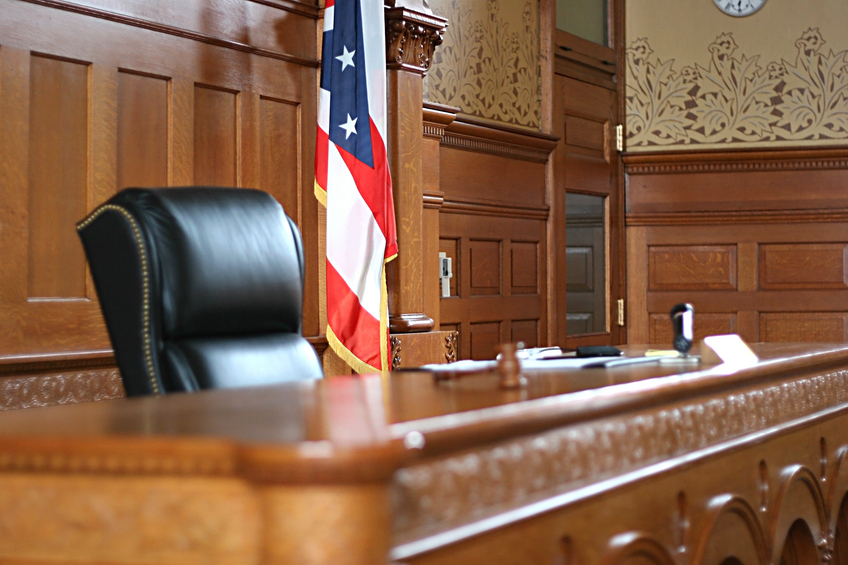
What Trial Practice Means at a Small Firm
In a small firm there is no separate trial department. The lawyer who meets you, drafts the discovery, takes the depositions and argues the motions is the lawyer who stands in front of the jury. Nothing is handed off, and nothing is filed that the lawyer is not prepared to defend out loud.
It is also a discipline about timing. Experts are retained while the evidence still exists, records are organized as they arrive, and a trial date is never a scramble. Preparing a case this way costs more upfront than settling early. It is also the only way to learn what the case is actually worth.
Jury Selection in Georgia: Voir Dire and Strikes
Jurors are drawn from the county’s master jury list, and the panel that appears is shaped by the court’s excusals and the parties’ challenges. Both sides question the panel; in Georgia the judge often does most of the questioning, with attorney follow-up permitted.
Each side may excuse jurors for cause without limit, for bias, a relationship to a party, or an inability to be fair. Each side also has a limited number of peremptory strikes that need no reason at all. Those strikes cannot be used to remove jurors because of race, ethnicity or sex, and if that appears to happen the other side can object and the striking lawyer must explain the strike on the record.
Opening Statements and the Burden of Proof
An opening statement is not argument. It is a roadmap of the evidence the jury is about to hear, and it is where a jury first decides whether a version of events holds together.
The burden of proof never moves. In a civil case the plaintiff must prove each element by a preponderance of the evidence, meaning more likely true than not. In a criminal case the State must prove guilt beyond a reasonable doubt, and the defendant never has to prove anything. Because the burden stays where it started, a defense can win a civil case without proving its own theory; it only has to make the plaintiff’s proof unconvincing.
Direct and Cross-Examination
Direct examination is your own case: you call the witnesses who can establish what happened and ask open questions that let them tell the story. Cross-examination is where credibility is tested, with leading questions, prior inconsistent statements and the limits of what a witness actually saw.
A deposition is cross-examination on paper. Anything a witness says there can be read back at trial, which is why depositions are prepared for as carefully as testimony in front of a jury.
The Rules of Evidence
Georgia’s Evidence Code (OCGA § 24-1-1 et seq.) governs what a jury is allowed to hear. Relevance is the baseline. Hearsay is generally excluded unless an exception applies, and the exceptions do most of the work in injury and business cases: business records under OCGA § 24-8-803(6), medical records and public records.
Expert testimony must satisfy OCGA § 24-7-702, and the judge acts as gatekeeper on whether an expert’s method is reliable. Much of trial practice is simply this: getting the good evidence in cleanly and keeping the other side’s evidence out.
Pre-Trial Orders and Consolidation of Actions
Georgia’s Uniform Superior Court Rules require a pre-trial order in most civil cases. It fixes the parties, the claims and defenses, the witnesses, the exhibits and often the estimated trial time, and once it is signed it controls the trial. A witness or exhibit that is not listed generally cannot be used.
Related cases can be consolidated under OCGA § 9-11-42(a) when they share common questions of law or fact, and a court can order separate trials when consolidation would prejudice a party.
Alternative Dispute Resolution and Mediation
Most Georgia civil cases do not end in a verdict. Superior Court circuits commonly require mediation before trial by local rule, and Georgia’s Alternative Dispute Resolution Act allows courts to order cases into mediation or arbitration.
Mediation is a facilitated negotiation, and the mediator has no power to decide anything. It works when both sides know what the courtroom looks like, which is why it usually happens after discovery. Arbitration is different: the arbitrator decides, and the right to appeal is narrow. Where the parties agreed in advance to arbitrate, the Georgia Arbitration Code (OCGA § 9-9-1 et seq.) governs.
Appeals and the Appellate Record
Appeals go to the Court of Appeals of Georgia or, in certain cases, to the Supreme Court of Georgia. A notice of appeal must be filed within 30 days of the entry of the judgment or order being appealed (OCGA § 5-6-38), and the transcript has to be ordered and included, because an appellate court reviews the record, not the argument.
Errors must be preserved at trial with an objection or a motion, or the appellate court generally will not consider them. The appellate courts decide questions of law; they do not re-weigh evidence or second-guess a jury on credibility.
Why Trying Cases Makes Settlement Leverage Real
A settlement offer is a prediction about what a jury would do. If the other side believes the file will sit, that the expert will never be retained, or that the case will fold under pressure, the offer reflects that belief. When the file is documented, the witnesses are deposed and the experts are ready, the prediction changes.
That is the point of trial practice. Not that every case is tried, but that every case could be. Every file in this office is prepared as if it will be tried, because that is what makes the other side’s math honest.
Talk to a Georgia Trial Lawyer
We represent clients in criminal defense, divorce and family law, and personal injury matters in Superior, State, Magistrate, Probate and Municipal courts across Athens-Clarke, Oconee, Gwinnett, Barrow, Walton, Jackson and Hall counties. The questions clients ask most are answered on our frequently asked questions page.
Tell us where your case stands. We will explain the next step and what it will take to get the file ready for a courtroom.